
Albania doesn’t make the front page of most travel guides. It doesn’t have a major international airport hub, a Disney attraction, or a Michelin-starred restaurant scene that draws weekend crowds. What it does have is something increasingly rare in Europe: landscapes that still feel genuinely untouched, coastline that rivals Croatia at a fraction of the price, and mountain villages that time seems to have forgotten.
If you’ve never seriously considered Albania as a travel destination, this guide is here to change that.
Why Albania?
Tucked into the southwestern Balkans, Albania is surrounded by Montenegro to the north, Kosovo and North Macedonia to the east, and Greece to the south. Its western edge opens onto the Adriatic and Ionian seas, giving it a coastline that runs for nearly 450 kilometers – much of it undeveloped and strikingly beautiful.
The country spent decades isolated under communist rule, which, paradoxically, is part of what makes it so captivating today. The infrastructure is catching up fast, but the soul of the place – the mountain traditions, the hospitality, the raw wilderness – is still very much intact.
And it’s affordable. Compared to Western Europe, your budget stretches considerably further. Guesthouses in the Albanian Alps typically cost a fraction of equivalent accommodation elsewhere, and meals are hearty, local, and cheap.
The Albanian Alps: The Crown Jewel
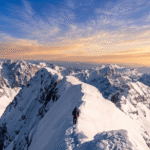
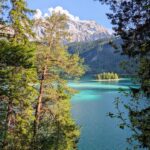
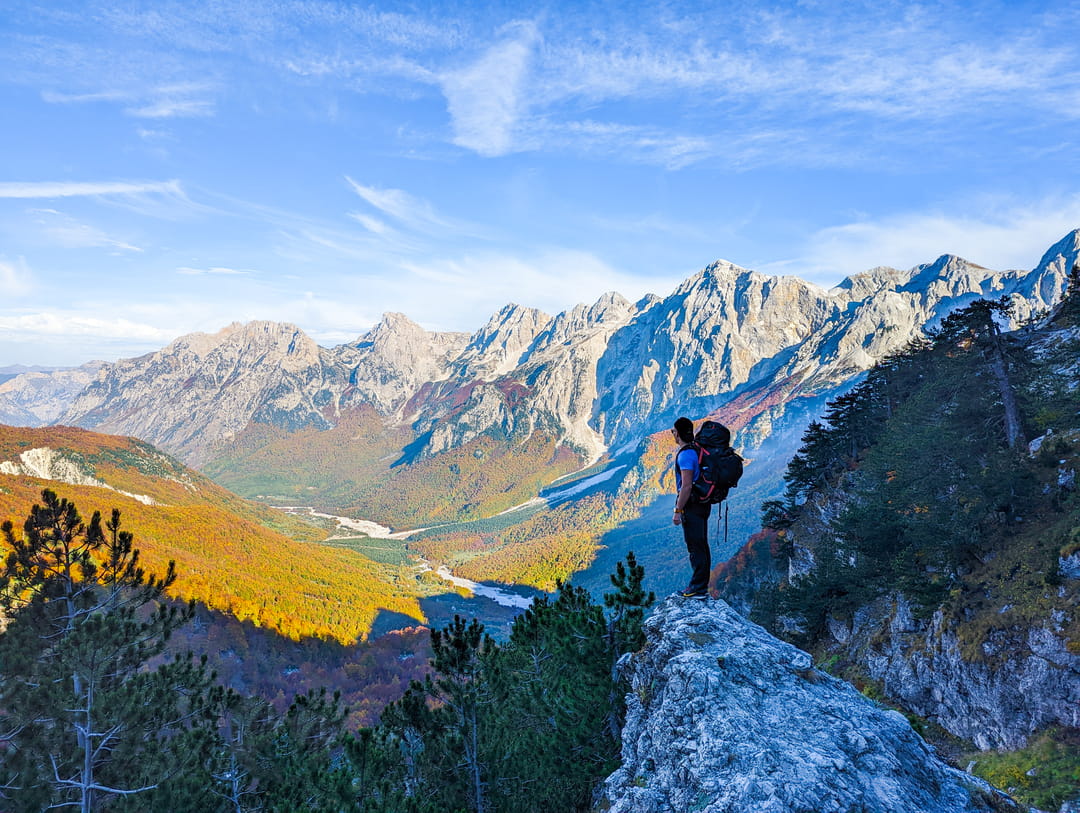
For anyone who loves the outdoors, the Albanian Alps – locally called the Accursed Mountains, or Prokletije – are the headline act. This dramatic mountain range in the north of the country is home to some of the most spectacular hiking in the entire Balkans.
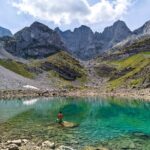
Valbona Valley National Park is the main gateway. The valley itself is a jaw-dropping landscape of river, forest, and towering peaks, and it serves as the starting point for several major hikes. Guesthouses here are traditional, welcoming, and affordable – but book early in summer, as they fill up fast.
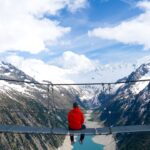
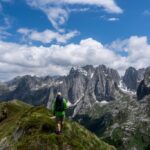
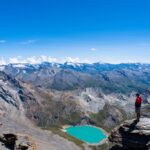
The most iconic route in the region is the Valbona to Theth trail – a 12-kilometer hike with around 950 meters of elevation gain, crossing over Valbona Pass at roughly 1,795 meters. The views from the pass are genuinely unforgettable: two valleys stretching out on either side, framed by the jagged peaks of the Accursed Mountains. The trail is accessible from June to November; outside of that window, snow makes it dangerous.
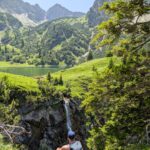
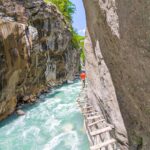
Theth National Park, on the other side of the pass, is one of the most isolated communities in Albania. The village is small and self-sustaining, surrounded by mountains and rich with highland history. Must-sees include the Lock-in Tower (a historic refuge tower), the Grunas Waterfall – about an hour’s walk from the village center – and the Blue Eye of Theth, a strikingly clear natural spring hidden inside a canyon.
For those wanting to push further, peaks like Cet Harusha (2,421 m) in the Valbona Valley and Maja e Rosit offer 360-degree panoramas that take in Valbona, Theth, and beyond – provided the weather cooperates.
The Southern Coast: A Different Kind of Wild
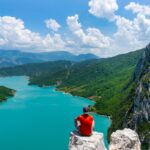
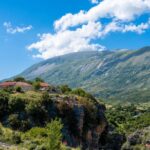
Albania’s south is a world apart from its northern mountains. The Albanian Riviera – the stretch of Ionian coastline from Vlorë down to the Greek border – offers beaches that genuinely compete with the Mediterranean’s finest, but without the overcrowding.
Grama Bay and Shën Andre Bay, both accessible by trail from the village of Palasë, are among the most stunning spots on the entire Adriatic. The hike is not overly strenuous, running parallel to the sea and rewarding you with coastal views that improve with every step. Grama Bay in particular – tucked inside a former communist-era military zone – feels like a secret the rest of Europe hasn’t caught onto yet.
Gjipe Beach, near the village of Dhërmi in the south, is another stand-out. Accessible only on foot or by boat, it sits at the junction of the sea and a canyon, completely sheltered and crystal clear. Getting there is half the experience.
Practical Tips Before You Go
Getting around: Albania doesn’t have an extensive train network, so most travel between regions is by bus or furgon (shared minivan). Buses from Tirana reach Bajram Curri (gateway to Valbona) in around four hours. For the south, buses run regularly from Tirana to Sarandë and Gjirokastër.
When to visit: Late May through September is the sweet spot. The Alps are best from June to October, while the coast peaks in July and August. Spring brings lush green landscapes and far fewer crowds.
Accommodation: In the Alps, traditional guesthouses are the norm – expect home-cooked meals, friendly hosts, and a genuine sense of place. In coastal areas and cities, there’s a broader range including boutique hotels. Budget travelers will find Albania extremely easy on the wallet.
Language: Albanian is the official language. English is spoken in tourist areas and by younger generations, but learning a few words of Albanian goes a long way and is always appreciated.
Safety: Albania is generally very safe for travelers. The famous besa – a code of honor and hospitality deeply embedded in Albanian culture – means guests are treated with remarkable warmth and respect.
A Country That Rewards Curiosity
Albania is the kind of destination that gives back in proportion to the effort you put in. The easier, more polished version – beach clubs and organized tours – exists and is growing. But the real Albania is in the mountain trails, the family-run guesthouses, the canyon swims, and the views from passes that most of Europe has never heard of.
Go now, while it still feels like a discovery.
Have you been to Albania? We’d love to hear about your experience – drop a comment below or tag us in your trail photos.
Last modified: April 9, 2026